Retrieval, search & knowledge access
Agentic search; RAG; context-aware ranking; conversational information access; heterogeneous and dynamic evidence.
Retrieval, Memory, and Reasoning
How can agents find the right evidence, keep knowledge current, and reason with context that changes over time?
AI agents draw on two complementary sources of intelligence: frontier models and context. Frontier models provide broad knowledge and reasoning capabilities, but may lack the information needed to understand a company’s workflows, a team’s decisions, or a user’s preferences. This information is often private, evolving, or absent from pretraining data. For example, in healthcare, context is especially important. Preparing for a visit requires understanding what has changed since the patient’s last appointment. Finding relevant medical evidence means connecting it to that patient’s history and current situation. A referral or handoff needs the right information for the next care team. These tasks require agents to connect patient records, clinical knowledge, and organizational workflows—and keep that context current.
Contextual intelligence is the ability to acquire, represent, organize, retrieve, and reason over such information. Retrieval brings relevant evidence into scope; memory preserves and updates knowledge across interactions; reasoning uses context to guide actions and identify what is missing. These capabilities continually shape one another, enabling agents to adapt to changing tasks and environments.
CI4Agents brings together the search, recommendation, and agent communities to explore how context turns general model capabilities into effective behavior. We welcome research on context acquisition and representation, retrieval, memory, and reasoning, alongside evaluations of reliability, personalization, and efficiency. WSDM’s strengths in search, user modeling, and Web data make it a natural home for this discussion.
We welcome original research, preliminary results, position papers, and resource papers on contextual intelligence for AI agents. We especially encourage contributions that connect retrieval, memory, and reasoning.
Topics include, but are not limited to, the following. We especially welcome work that connects capabilities or studies how context changes over time.
Agentic search; RAG; context-aware ranking; conversational information access; heterogeneous and dynamic evidence.
Episodic and semantic memory; construction, retrieval, consolidation and forgetting; knowledge graphs; temporal consistency and updates.
Reasoning over evidence and memory; context-aware planning; tool selection; verification, reflection and error recovery.
Text, image, audio, video and structured data; context selection and compression; long-context models and external memory.
Shared and distributed memory; communication, task delegation and coordination under incomplete or conflicting information.
Continual learning; interaction feedback; reinforcement learning for context management; changing user preferences.
Search, recommendation, e-commerce, enterprise knowledge work, scientific discovery, healthcare and Web navigation.
Long-horizon benchmarks; reliability, provenance, privacy and security; quality, latency and compute trade-offs.
* The submission deadline is November 30, 2026 at 11:00 PM Anywhere on Earth (AoE), matching OpenReview. The notification date is provisional and will be no later than December 18, 2026 (AoE). The workshop date is fixed.
The submission portal opens on October 24, 2026 at 1:00 PM AoE. Authors should create and activate their OpenReview profile in advance; new profiles without an institutional email may require moderation.
Submissions must be in English and self-contained. The main paper must not exceed six pages, excluding references and appendices. References may be of any length. An optional appendix of arbitrary length may be included after the references. Submit a PDF using the ACM Proceedings Template in double-column sigconf format on US Letter paper. Use a font size of at least 9 pt and embed all non-standard fonts. Check that the PDF opens and prints correctly on common platforms.
Submissions must be anonymized for double-blind review: omit names, affiliations, identifying acknowledgments, and non-anonymous links. LaTeX authors can use \documentclass[sigconf,anonymous,review]{acmart}. Accepted papers will follow the WSDM 2027 final-submission instructions when available.
The proposal plans at least two non-conflicted, double-blind reviews per submission, considering relevance, soundness, clarity, reproducibility, and potential for discussion.
The workshop is in person. WSDM states that accepted papers without an in-person presentation will be excluded from the Companion Proceedings. WSDM 2027 plans to include accepted workshop papers in its Companion Proceedings, subject to final author instructions and the in-person presentation requirement.
A morning of ideas, research talks, and discussion with a closing session after lunch.
Session times and speaker details will be confirmed with the conference organizers. The workshop has been accepted as a half-day event.
09:00 — 11:50
4–5 presentations · approximately 10 minutes each
11:50 — 13:40
 Steven(Jiayuan)DingHippocratic AI
 Huayi YangXi’an Jiaotong University
 Xinyi FanUniversity of Illinois Urbana-Champaign
 Wenqi FanThe Hong Kong Polytechnic University
 Jiaxing ZhangIndependent Researcher
 Yixin WangStanford University
 B. Aditya PrakashGeorgia Institute of Technology
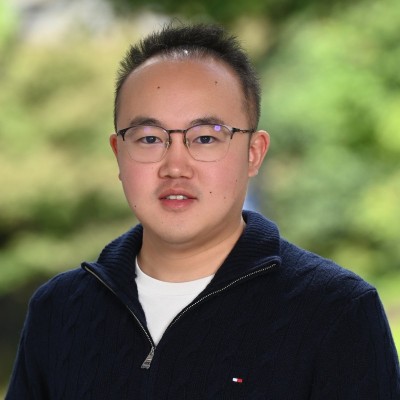 Qiaoyu TanNew York University Shanghai
 Xiangliang ZhangUniversity of Notre Dame
 Subhabrata MukherjeeHippocratic AI